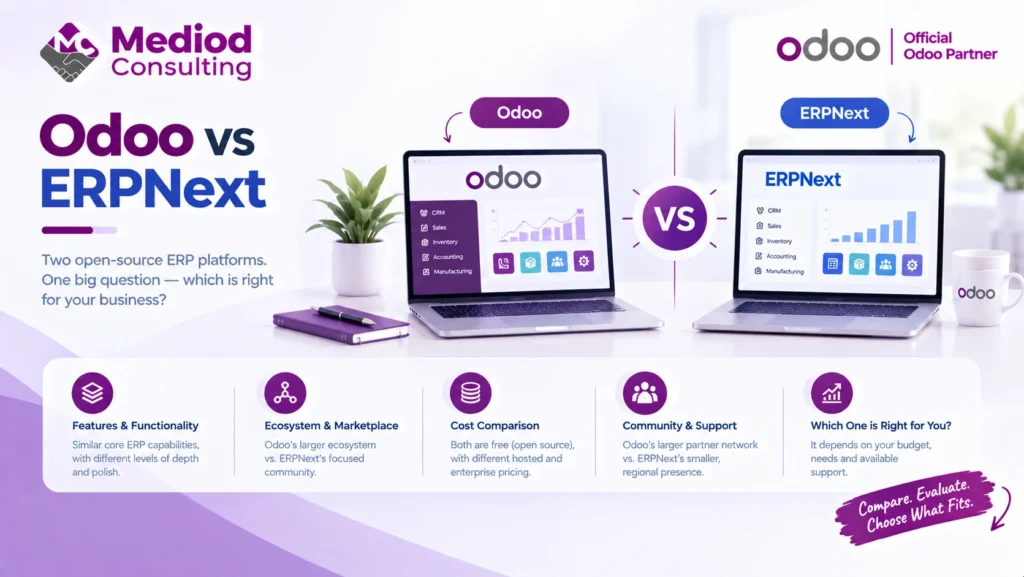
ERPNext is genuinely the closest comparison to Odoo in the market — both are open-source ERP platforms with free community editions, modular architecture, and broad functional coverage. This comparison is more about depth and ecosystem maturity than fundamentally different philosophies.
What ERPNext offers
ERPNext is a fully open-source ERP with a genuinely free core offering (including hosted options at lower cost than Odoo’s equivalent), built by Frappe, with a smaller but dedicated community. It covers similar ground to Odoo — accounting, inventory, manufacturing, CRM — within a comparable open architecture philosophy.
Where the platforms genuinely differ
Odoo has a significantly larger ecosystem — more third-party apps, more implementation partners, more available developer talent, and a larger, more mature app marketplace. This translates into more resources available when you need help, more pre-built functionality for niche needs, and generally more polish in the user interface, reflecting years of larger-scale commercial investment. ERPNext’s smaller ecosystem means less pre-built functionality for edge cases, but also a leaner, sometimes more straightforward core experience for businesses with simpler needs.
Cost comparison
Both offer free, open-source core editions. ERPNext’s hosted (Frappe Cloud) pricing tends to be lower than Odoo’s equivalent hosted options, which matters for very cost-sensitive implementations. Odoo’s Enterprise edition, with its additional features and support, costs more but reflects a broader and more mature feature set for businesses that need it.
Community and support ecosystem
Odoo’s much larger implementation partner network (globally, including firms like Mediod Consulting) means more available expertise for implementation, customization, and ongoing support. ERPNext’s smaller partner ecosystem can mean fewer options when sourcing implementation help, particularly outside regions where it has stronger regional presence.
When ERPNext might be the better fit
Extremely cost-sensitive implementations, particularly for straightforward needs where Odoo’s broader ecosystem isn’t necessary, or businesses in regions with stronger local ERPNext community presence, may find it a reasonable alternative worth evaluating directly.
Frequently Asked Questions
Is ERPNext genuinely comparable to Odoo in functionality?
For core ERP functions, yes — both cover similar ground. The differences show up more in ecosystem breadth, polish, and available implementation support than in fundamental core capability.
Is ERPNext cheaper than Odoo overall?
Often somewhat cheaper for hosted deployment and Enterprise-equivalent features, though the total cost comparison depends heavily on your specific implementation and support needs.
Can a business migrate between Odoo and ERPNext?
Yes, though as with any ERP migration, it requires careful data migration and process mapping given the platforms’ different underlying data structures.
Compare Two Open-Source ERP Approaches Directly
The right choice often comes down to ecosystem breadth and available implementation support more than raw feature differences. Talk to Mediod Consulting about comparing Odoo and ERPNext for your business.