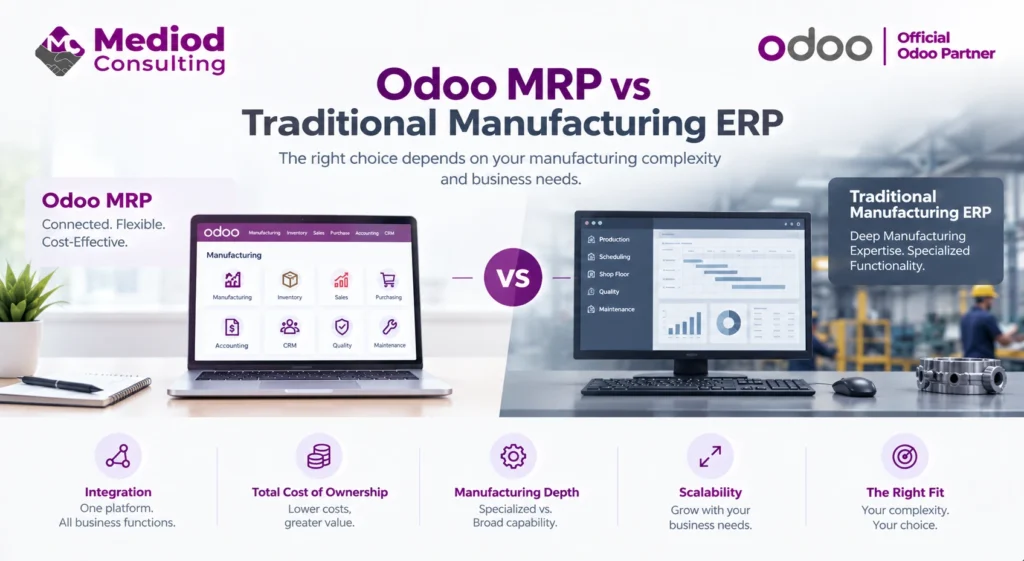
Traditional manufacturing ERP systems have been around far longer than Odoo, built specifically and deeply for production environments. The comparison with Odoo’s MRP comes down to depth of manufacturing-specific functionality versus breadth of connected business operations.
What traditional manufacturing ERP typically offers
Systems built specifically for manufacturing (think established players focused primarily on production environments) often have deeper, more mature functionality for complex manufacturing scenarios — advanced scheduling algorithms, deep shop floor data collection, and industry-specific features refined over decades of manufacturing-focused development.
Where Odoo’s approach differs
Odoo’s MRP is genuinely capable for a wide range of manufacturing needs, but its real differentiator isn’t out-manufacturing a manufacturing-specialist system — it’s that the same platform natively covers Sales, Inventory, Accounting, Purchasing, and CRM, all sharing one database with Manufacturing. A traditional manufacturing ERP often needs separate integration to connect with non-manufacturing business functions, while Odoo has that connectivity built in from the start.
Total cost of ownership comparison
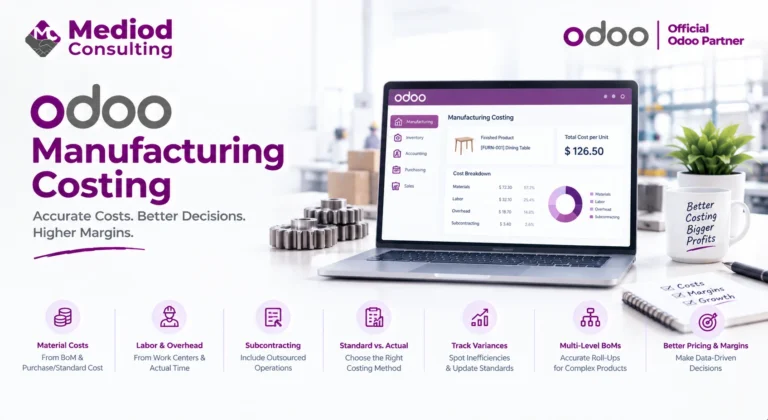
Traditional manufacturing ERP systems, particularly ones with deep specialization, often carry higher licensing and implementation costs, reflecting their specialized depth. Odoo’s Community edition is free to license, with cost concentrated in implementation and any Enterprise features needed — for a manufacturer that also needs broader ERP functionality beyond production, Odoo’s total cost is often meaningfully lower than a traditional manufacturing system plus separate integrations for the rest of the business.
When a traditional manufacturing ERP makes more sense
For manufacturers with genuinely complex, specialized production requirements — highly regulated industries, extremely intricate scheduling constraints, deep integration with specific manufacturing equipment protocols — a system built specifically for that depth of manufacturing complexity may justify its higher cost and narrower focus. This is a smaller share of manufacturers than the marketing of specialized systems sometimes implies, but it’s a real category.
When Odoo’s connected approach makes more sense
For manufacturers whose complexity is more about connecting production to sales, purchasing, and accounting than about extremely deep production-floor specialization, Odoo’s breadth tends to deliver more practical value than a narrower, deeper manufacturing-only system that then needs separate integration work to connect to the rest of the business.
Frequently Asked Questions
Can Odoo handle complex, multi-level manufacturing operations?
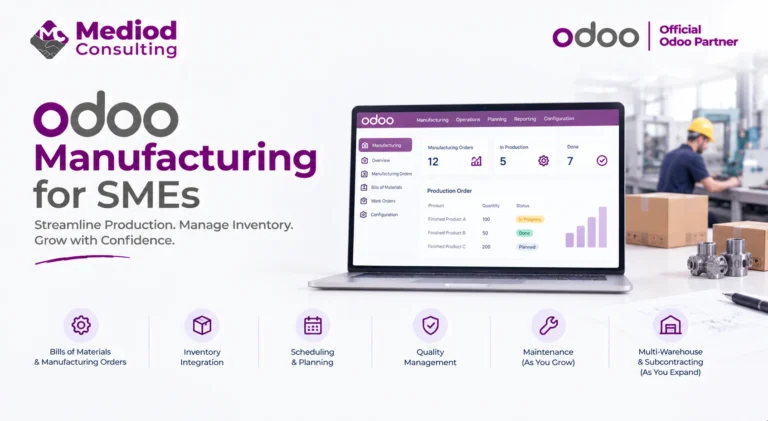
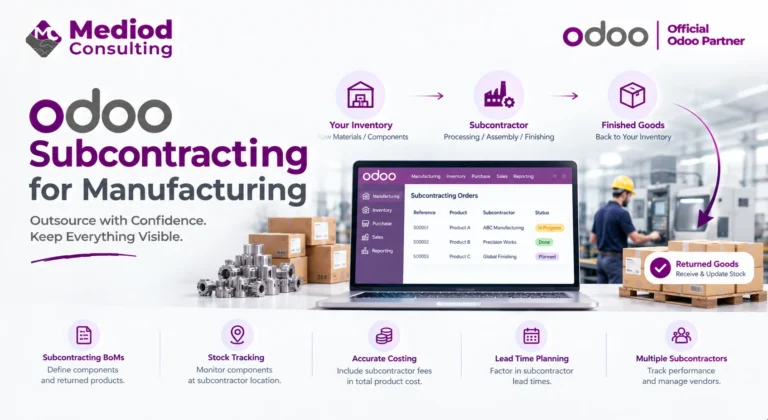
Yes, Odoo’s MRP supports multi-level BoMs, subcontracting, quality, maintenance, and PLM — genuinely capable for a wide range of manufacturing complexity, though not necessarily matching every specialized feature of a manufacturing-only system.
Is migrating from a traditional manufacturing ERP to Odoo disruptive?
It’s a significant project requiring careful data migration and process mapping, similar in scope to any major ERP migration — worth planning deliberately rather than rushing.
How do I know if my manufacturing complexity needs a specialized system?
If your production requirements go beyond what Odoo’s Manufacturing, Quality, Maintenance, and PLM apps cover — genuinely niche industry-specific requirements — a specialized system may be worth the tradeoff. For most manufacturers, this isn’t the case.
Compare Based on Your Actual Manufacturing Complexity
The right choice depends on whether your bigger need is manufacturing-specific depth or connected business operations. Talk to Mediod Consulting about comparing Odoo MRP to traditional manufacturing ERP for your business.