Most migration problems we get called in to fix aren’t caused by bad luck — they trace back to a handful of recurring, largely avoidable causes. Knowing what they are before starting a migration is the cheapest way to avoid them.
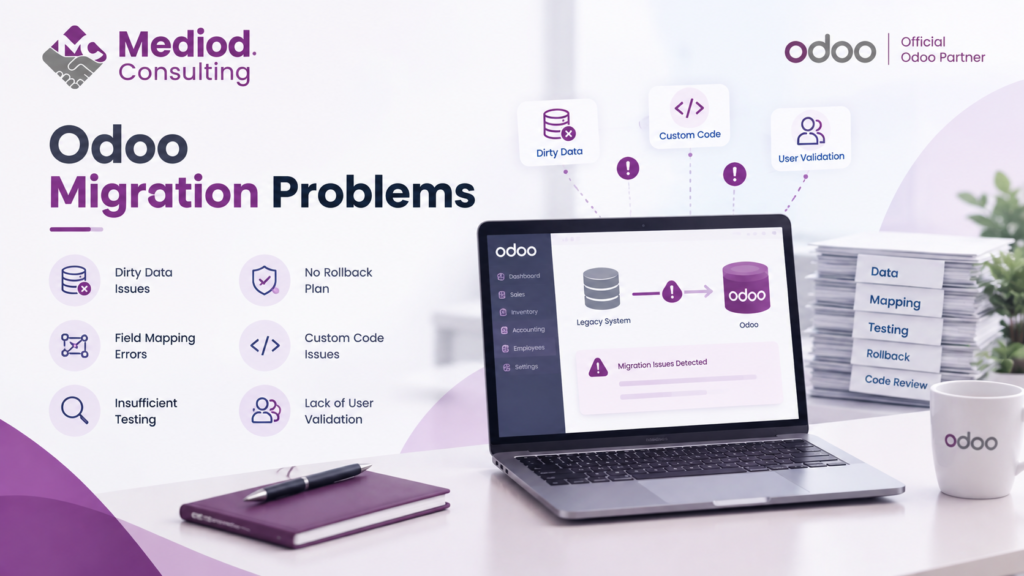
Migrating dirty data without cleaning it first
Duplicate records, inconsistent formatting, and missing required fields don’t get better by moving them into a new system — they just become dirty data in the new system too, now compounded by whatever the migration process itself introduces. Cleaning data at the source is almost always cheaper than cleaning it after migration.
Insufficient field mapping
Assuming a source field maps directly to a target field without checking is a common source of subtle errors — a field that looks similar in name might store data differently, or a source system’s field might need to split into multiple target fields to migrate correctly. Rushing field mapping is how migrated data ends up technically present but practically wrong.
Skipping thorough testing
Testing only the “happy path” — a few straightforward records — misses the edge cases that cause real problems: unusual data combinations, records with missing optional fields, or relationships that don’t map as cleanly as the common case. See our Migration Testing guide for what thorough testing actually covers.
No rollback plan
Migrations occasionally need to be paused or reversed mid-process — a rollback plan that’s actually been thought through (not just assumed to be possible) is what prevents a mid-migration problem from becoming a crisis.
Underestimating custom code review
For version migrations especially, custom code that references APIs or behavior that changed in the new version is a common source of post-migration breakage — thorough review before migration, not discovery after, is what avoids this.
Not validating with the people who know the data
Technical validation (record counts, format checks) catches structural problems, but only someone who actually knows the business data can catch a migration that’s technically correct but practically wrong — involving the right people in validation, not just IT, is essential.
Frequently Asked Questions
What’s the most common migration problem you see?
Dirty source data migrated without cleaning — it’s the single most common root cause behind a wide range of downstream issues that get blamed on “the migration” when the real problem started before migration even began.
Can migration problems be fixed after they’re discovered post-launch?
Often yes, though it’s more disruptive than catching them during testing — the earlier a problem is caught, the cheaper and less disruptive it is to fix.
How do we know if our migration plan has adequately addressed these risks?
A structured checklist and dedicated testing phase, reviewed against these common failure points specifically, is the best way to confirm your plan actually addresses them rather than assuming it does.
Avoid the Problems That Derail Migrations
Most migration problems are preventable with the right upfront planning and testing discipline. Talk to Mediod Consulting about planning a migration that avoids these common pitfalls.