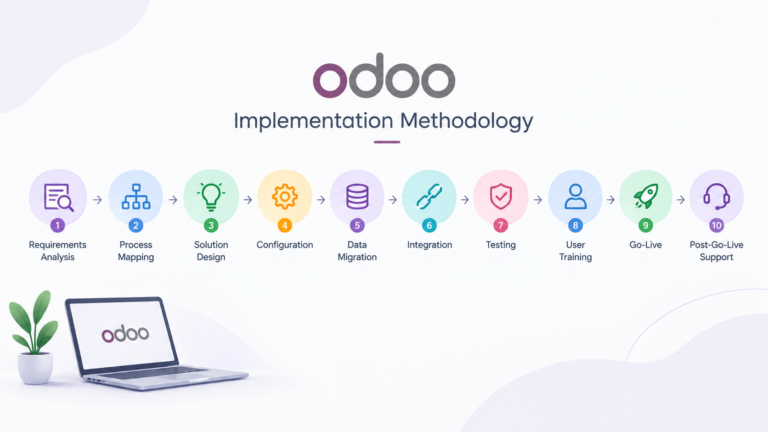

Odoo implementation can bring major benefits, but the process is not without risk. Many projects run into delays or avoidable problems because planning was rushed, scope was unclear, or users were not prepared for change.
The good news is that most implementation challenges can be avoided with the right preparation and support.
1. Scope creep
Scope creep happens when the project keeps expanding after work has already started. One team wants another report. Another wants an extra workflow. Soon, the timeline and budget are under pressure.
How to avoid it
Define the scope early and document it clearly. Any new request should be reviewed before it is added to the project.
2. Poor data quality
If your existing data is messy, duplicated, or incomplete, migration can become a major issue. Bad data can affect reporting, operations, and user trust.
How to avoid it
Clean and validate your data before migration. Test the migration process before go-live.
3. Low user adoption
Even a well-configured system can fail if employees do not use it properly. This often happens when teams are not trained or do not understand how the system helps them.
How to avoid it
Involve key users early and provide role-based training. Show employees how Odoo improves their daily work.
4. Integration problems
Many businesses need Odoo to connect with other tools. If integrations are not planned carefully, data flow issues can create delays and manual work.
How to avoid it
Map every integration need at the beginning of the project and test each connection carefully.
5. Too much customization too soon
Custom features can be useful, but too much customization can make the system harder to maintain and upgrade.
How to avoid it
Start with standard Odoo functionality where possible. Add custom features only when they clearly support your business needs.
6. Lack of internal ownership
If no one on your team is responsible for the project, decisions can slow down and issues can go unresolved.
How to avoid it
Assign an internal project owner who can coordinate stakeholders and keep the project moving.
How Mediod Consulting Helps You Avoid These Challenges
Every challenge above has one thing in common: it gets much easier to avoid with an experienced partner managing the process. As a certified Odoo Partner, Mediod Consulting handles scoping, data cleanup, training, and integration planning as standard parts of every Odoo implementation — not afterthoughts. Book a free consultation and we’ll walk through your specific risk areas before you commit to a timeline or budget.
Frequently Asked Questions
What is the most common reason Odoo implementations fail?
Scope creep and poor data quality are the two most common causes. Both are preventable with clear upfront planning and a documented project scope.
How long does it take to fix low user adoption after go-live?
It depends on the root cause, but role-based retraining combined with clear communication about how Odoo helps day-to-day work typically shows improvement within a few weeks.
Should I customize Odoo or use it as standard?
Start with standard functionality wherever it fits your process, and add customization only where it clearly supports a real business need — this keeps the system easier to maintain and upgrade later.
Get Started with Mediod Consulting
Odoo implementation challenges are common, but they are not inevitable. With careful planning, strong communication, and the right implementation partner, you can reduce risk and launch a system that works for your team. Talk to Mediod Consulting before you start — a short scoping call now can save weeks of rework later, or email us for a free project assessment.